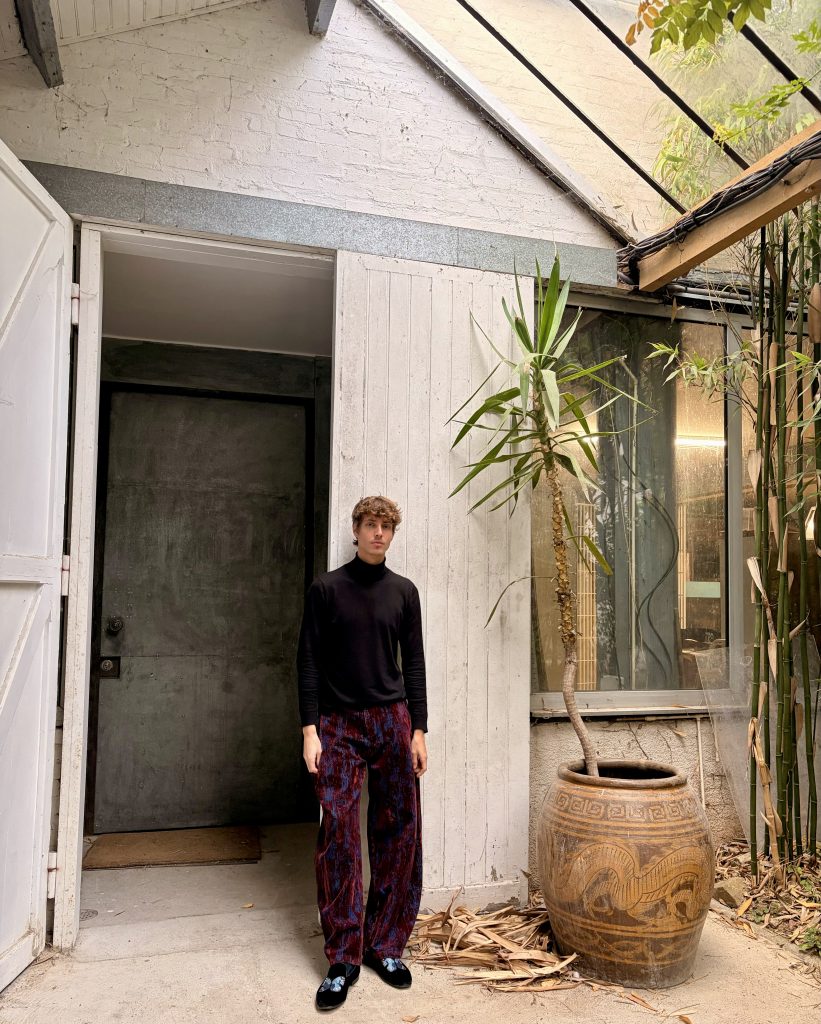
François Farcy: When Painting Becomes Inner Language
Some paths are not really chosen, but they impose themselves with obvious clarity. The story of François Farcy is one of those. Before becoming a painter, he worked as a translator, interpreter, and teacher… until a personal upheaval brought him back to France, empty-handed but with a mind full of necessity. It was there, almost without realizing it, that creation began to take over: first as a therapeutic outlet, then as a language, and finally as a vocation in its own right.
Today, his artistic universe blends introspection, texture, semi-realism, and fragments of emotion laid gently onto the canvas. His works speak of freedom, memory, transition, loss, and rebirth. They invite us to slow down, to observe, to feel, and above all, to live in the present moment.
In this interview, François Farcy reflects on his journey, his inspirations, his rituals, his relationship with materials, the challenges of contemporary artist, and the deep sensitivity that flows through each of his creations.
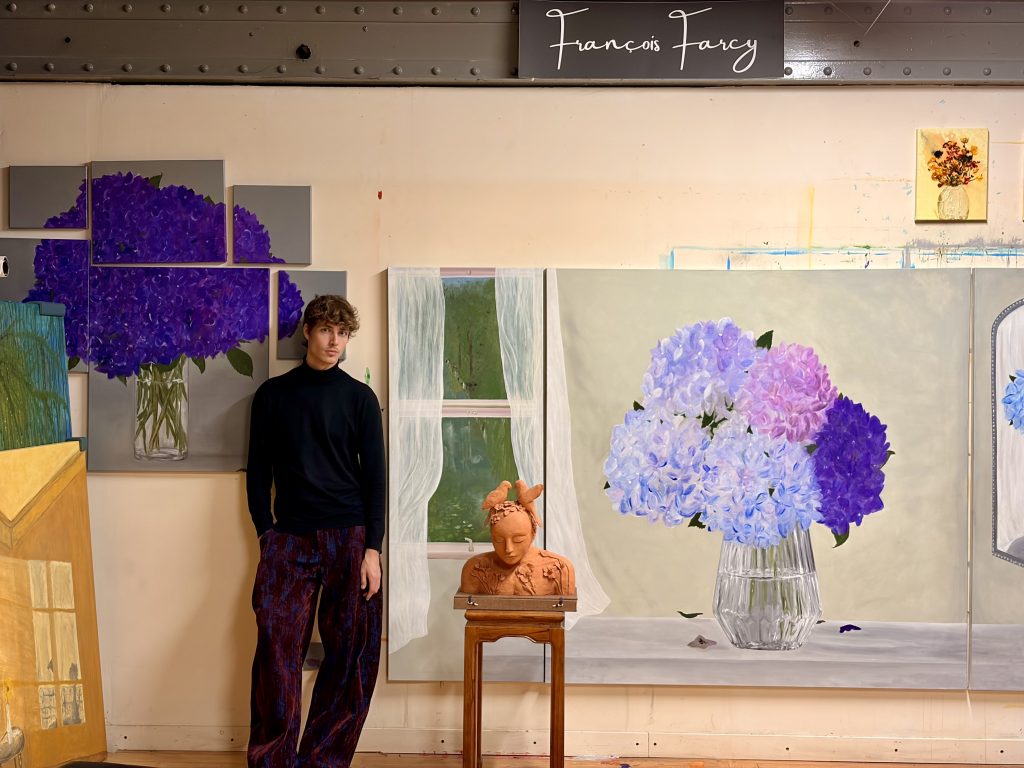
Interview with an Artist
François Farcy, could you tell us about your artistic journey? How did you start painting?
I started about 7 years ago. Before that, I was a translator-interpreter and a French teacher in Spain. After my separation, I came back to France and began creating a bit by chance. At first, I made candle holders and driftwood tables, then I added painting, first on my creations, then on small canvases and busts that I sold on auction sites. This therapeutic hobby gradually turned into something more professional.
What inspires you most in your work?
I love exploring new themes and experimenting. My works also reflect my emotions, often unconsciously. Painting becomes a form of introspection, a way to understand myself better while creating.
Is there a living or historical artist who has influenced your style?
I wouldn’t say one artist in particular influenced my style, but I’m sensitive to what I see. Chagall inspires me with his poetry and angels, but my main source of inspiration remains daily life, nature, light… Everything that a sensitive person can perceive.
How would you describe your artistic style to someone discovering your work for the first time?
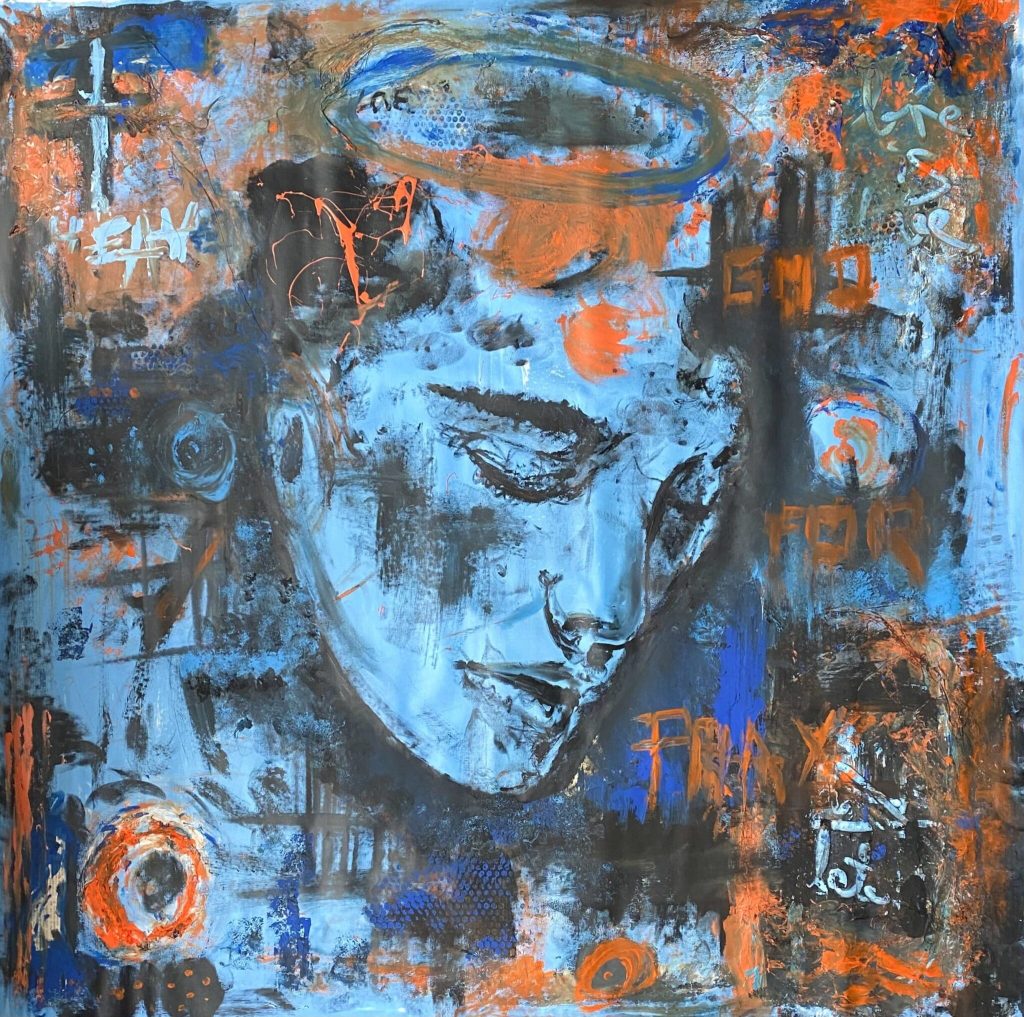
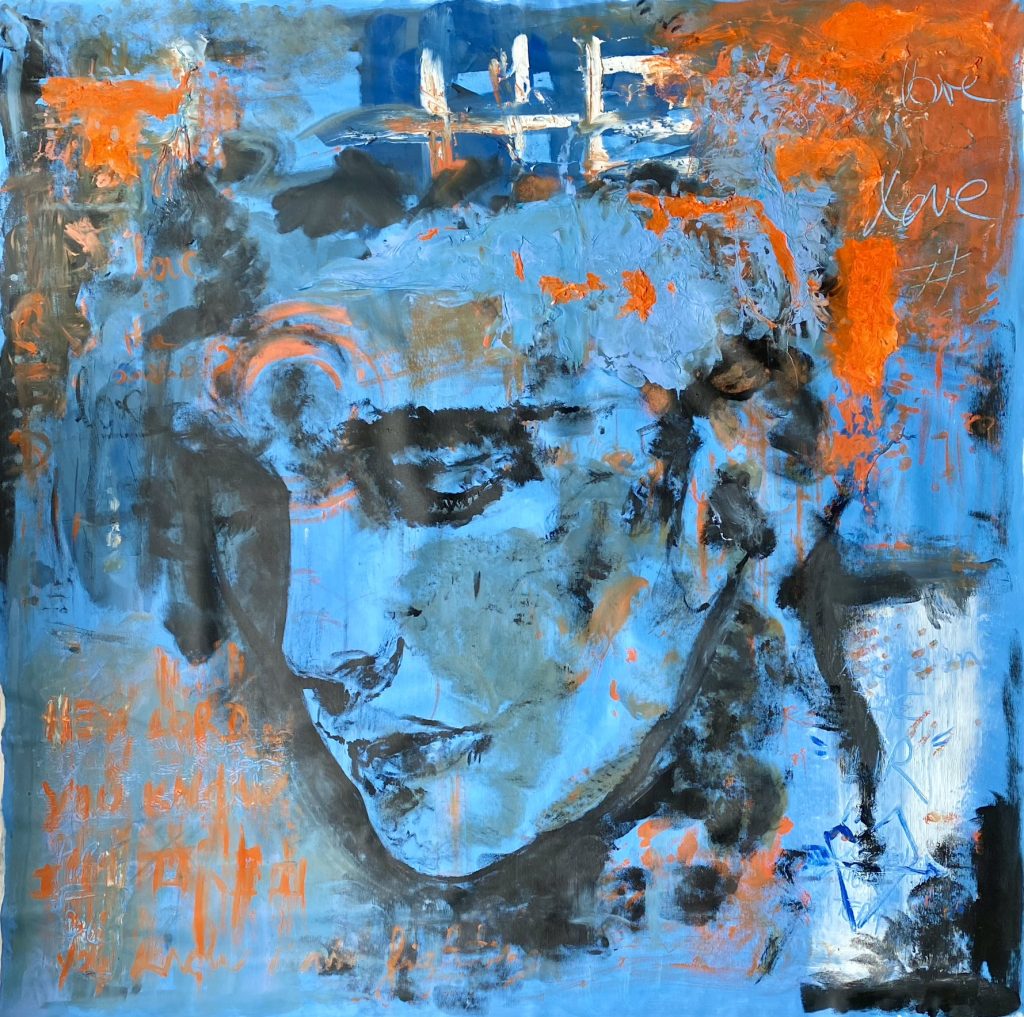
I do a lot of different things, so I prefer to show rather than describe. But if I had to sum it up: semi-realistic, textured, sometimes with a touch of surrealism and expressionism. I play with materials and texture to bring my subjects to life, ranging from nostalgia to love, memory, or loss.
What is your creative process, from idea to completion?
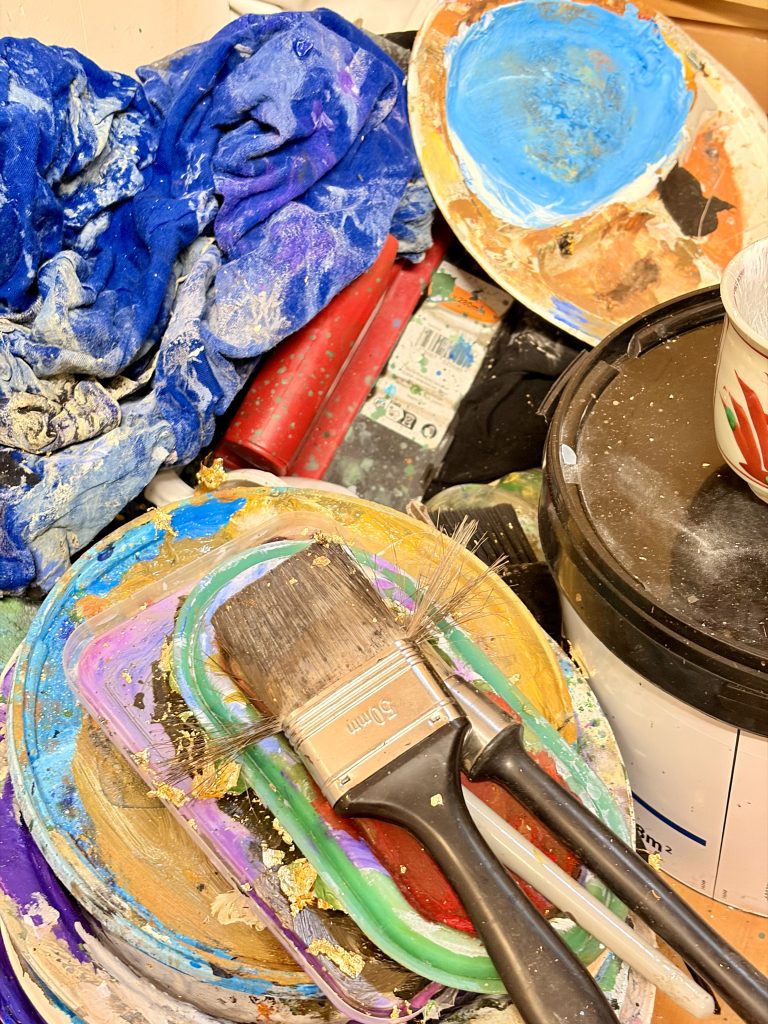
Ideas come throughout the day. I think a lot before focusing on a piece. I’m inspired by what I feel, by my personal experiences. Sometimes my canvases unconsciously reveal my needs or emotions, like a mirror of my subconscious.
How much space do improvisation and planning occupy in your work?
I plan very little, maybe 30%. The rest is spontaneous. Even if I start with a precise idea, the painting often evolves into something different. That’s what makes the process exciting and surprising.
Do you have any rituals or habits when you paint?
Yes, I often start by lighting Japanese incense and striking my gong. It’s a bit like opening and closing an artistic portal, a ritual to enter my creative bubble.
How do you choose your colors and materials?
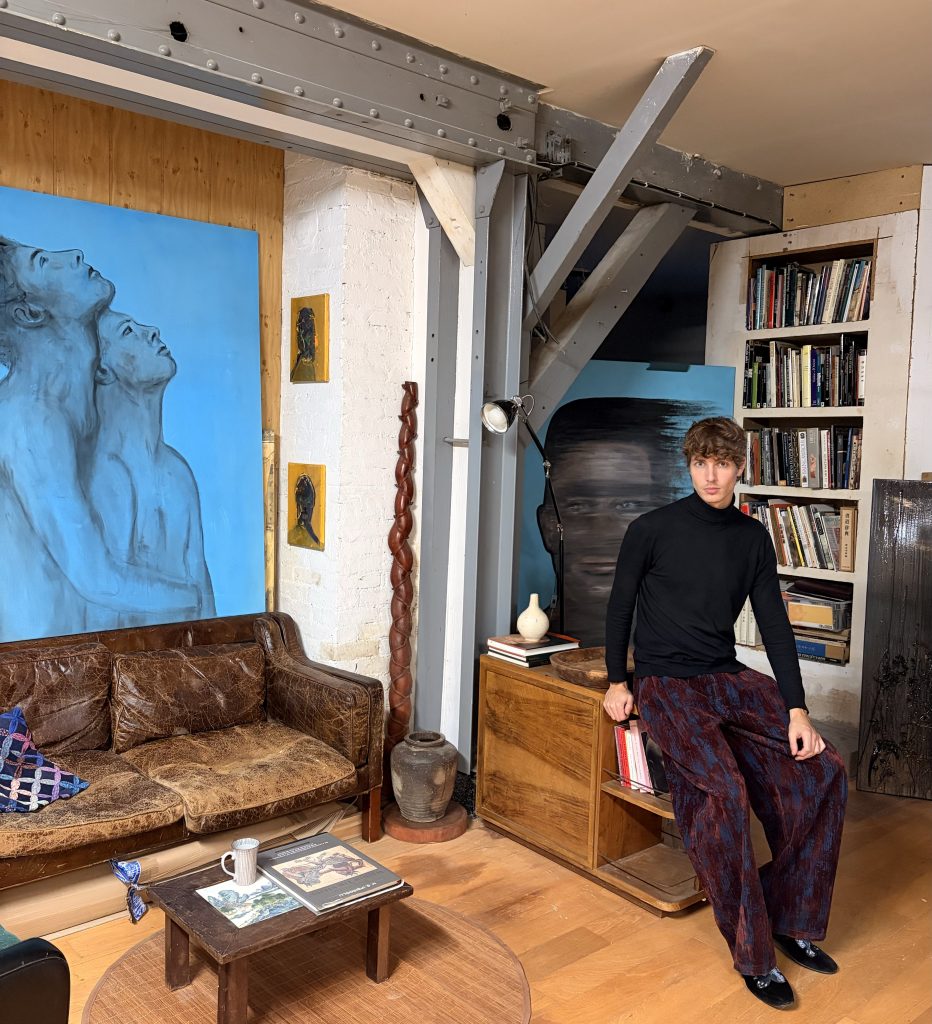
I use fairly dark and natural palettes: beige, off-white, brown, Klein blue, purple, green… Colors that reflect nature and life, far from the fluorescent shades I used before.
Is there a work that holds a special place in your heart?
Yes, “Liberté onirique” a blue painting with a young man and birds, created at the end of a difficult relationship. And a diptych of angels, “Hell and Heaven” made in Lisbon. These works are very personal and represent important periods of my life.
What technique do you prefer to use and why?
I love exploring, but I use a lot of texture and oil paint. It allows me to rework and shape the material, even if it takes time to dry. I also enjoy experimenting with fire to create special effects. I’m a bit of a pyromaniac at heart.
Do you work on several pieces at once?
Yes, I need variety so I don’t get bored. Sometimes several pieces are in progress at once, some almost finished but not yet varnished or signed.
What messages or emotions do you seek to convey through your art?
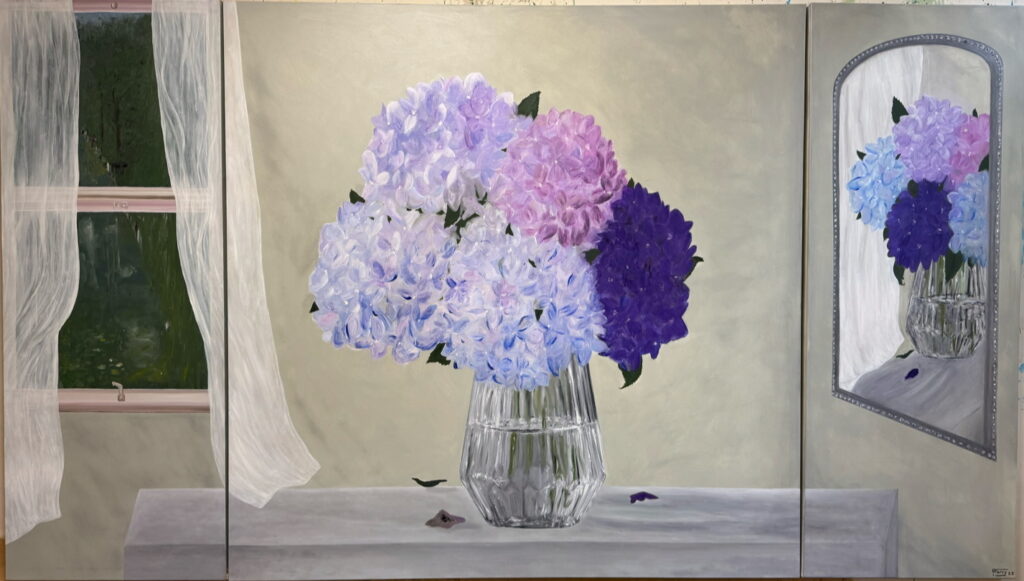
My latest series, “Memento Floris” reminds us of the importance of living in the present. My works convey Carpe Diem, gratitude, and the ephemeral beauty of life.
How do you react to viewers’ interpretations?
I don’t care. I find it funny to stand in a corner and listen to people say it’s not good at all while others love it. Art is very subjective, and I don’t try to please everyone. I have my audience, sensitive and attentive to my messages, and that’s what matters to me.
In your opinion, what role does art play in today’s society?
Art is essential and should be taught more. It opens the mind and raises awareness. It is a therapy, a means of expression, and a source of joy, for oneself and others.
What are your challenges as an artist today?
Sharing my ideas, raising awareness, bringing joy, and creating memorable experiences for those who discover my work.
How do you manage the visibility of your work?
It’s complicated. I’m mainly on social media, but it’s still important to be physically present in galleries and shops. Textured and living art is experienced better in person than through a screen.
Do you have any upcoming projects or collaborations?
I’m working on the “Memento Floris” series, a tribute to flowers and the cycle of life. It’s also a tribute to my grandmother, who had a lot of flowers and even won the village award because she had made everything bloom, the garden, the house, etc. The idea is to capture the ephemeral and invite everyone to enjoy the present moment.
If you could exhibit anywhere in the world, where would you go?
Art Basel, which offers enormous visibility, or a museum in Paris like the Musée de l’Orangerie, which has magnificent spaces for exhibiting artworks.
If you could invite a famous artist to share your studio, who would it be?
I would have loved to invite Basquiat. I’d like to talk about his journey and how he navigated between two worlds, from the simplest to the most sophisticated.
Do you prefer painting at a particular time of day?
Not in the morning. I start when I feel ready, often in the afternoon or early evening, in calm.
Do you have a lucky object in your studio?
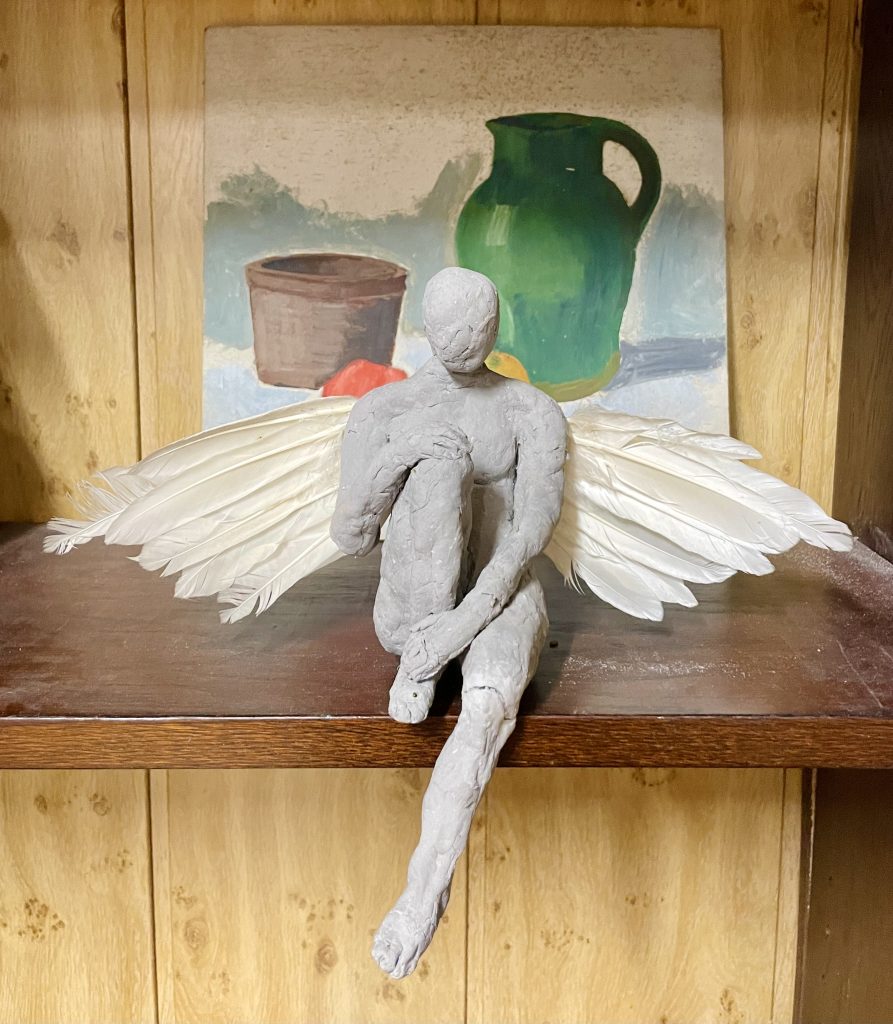
Perhaps my gong and a small Buddha. They bring me calm and protection, and mark the beginning and end of my creative sessions. But there’s also my little angel that I keep in my studio, up high, watching over me. That’s my special object.
Throughout this conversation, one thing becomes obvious: for François Farcy, painting is neither just a profession nor a simple aesthetic gesture.
Each canvas becomes an extension of a thought, a memory, an emotion, or an inner transition. His art, intuitive and textured, is the expression of a quest for meaning, balance and personal truth.
Between gratitude, emotional exploration, and the desire to capture the moment before it slips away, François Farcy builds a body of work that tells the story of life’s cycles: its trials and joys, its endings and transformations. And if his paintings resonate for you, it may be because they carry something rare: a raw, unfiltered sincerity. This deeply personal approach also reflects a true art-de-vivre, one rooted in presence, authenticity, and an enduring appreciation for life’s fleeting beauty.
As his projects continue to grow, especially through his “Memento Floris” series, the artist keeps moving forward with the same sensitivity and the same vital need to create. One thing is certain: His journey has only just begun.